Kilimanjaro Area map and tours overview
Mt Kilimanjaro
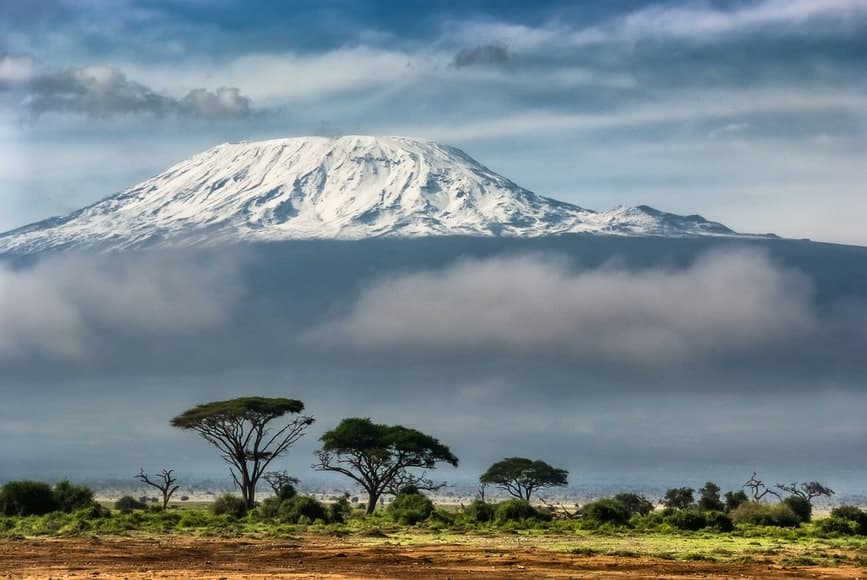
Mt Kilimanjaro is Africa's highest mountain, and the world's highest freestanding mountain. Over a distance of 90 km's hikers travel through rain forest, moorland, alpine desert, snow and ice; all this while gaining 4000 meters in altitude, all of this happening almost at the equator!
"Discovered" in 1848
For more than a century the Roof of Africa has intrigued men of the modern age. Mt Kilimanjaro was mentioned as early as the 1830's in western society, but it wasn't until 1848 that it was "discovered" by westerners. This is when Johannes Rebmann, a German missionary, explored the lower parts of the mountain.
Johannes' findings were submitted to the Royal Geographic Society, but "experts" doubted his findings of a snow-capped mountain in the middle of Africa.
First successful summit
In years to come, after Johannes' submission, various explorers attempted to summit Mt Kilimanjaro, but all were unsuccessful. However, the summit was reached successfully on October 6, 1889, by Dr. Hans Meyer, along with the experienced Ludwig Purtscheller, an alpine mountain climber, as well as many guides, advisors and porters. The party took almost six weeks to successfully reach the summit of Mt Kilimanjaro, a whopping six times longer than the average hiker today!
In 1989, a century after the successful summit, one of the original guides that formed part of the successful attempt, was still celebrating life at the ripe old age of 118!
Kilimanjaro National Park topography
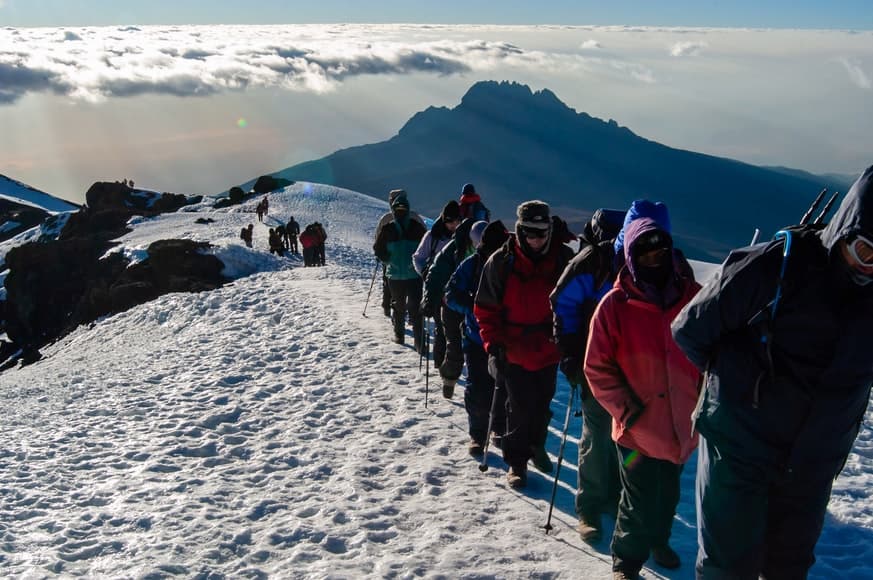
The mountain rises from roughly 2000 meters above sea level, to 5895 meters above sea level. Fumaroles in an ash pit are the only telltale sign that this was once a volcano. Kibo, the main peak, is flanked by two other peaks: Shira and Mawenzi, both of which provide grand backdrops for beautiful photography.
Five ecological zones on one mountain
Mt Kilimanjaro is divided into five ecological zones:
- Cultivated lower slopes, mainly used for agricultural purposes
- Montane forest
- Moorland and heath
- Alpine desert
- Ice capped peak
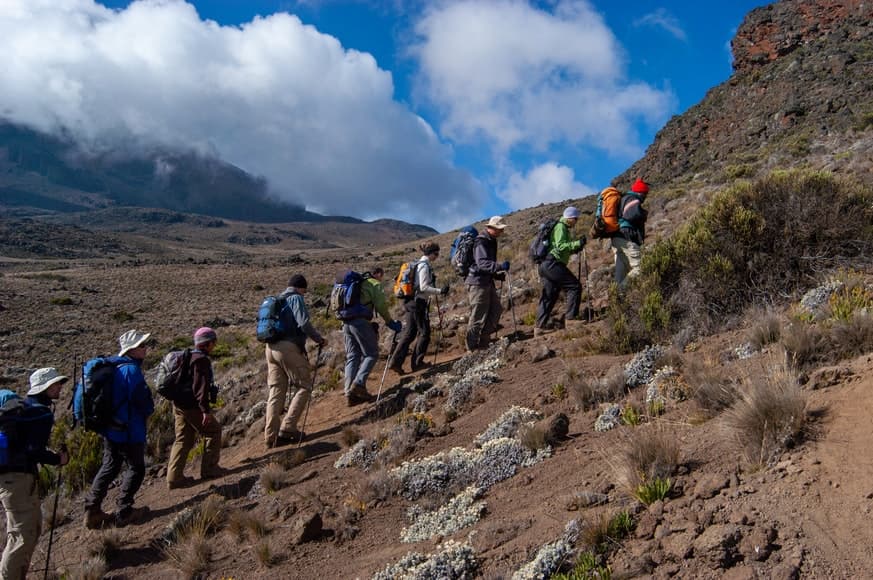
Tanzania's climate, and especially the lower Kilimanjaro National Park area, is ideal for growing coffee, which is one of the export products Tanzania is best known for. A rain forest belt loops the mountain a little higher up and even further up the mountain you pass through a heath that changes to semi-desert moorland, which turns to complete desert, and eventually alpine, with ice glaciers permanently forming part of the mountain.
Loose stone known as scree, which resembles gravel, form part of the scenery higher up, and makes traversing the terrain more difficult.
Permanent glaciers
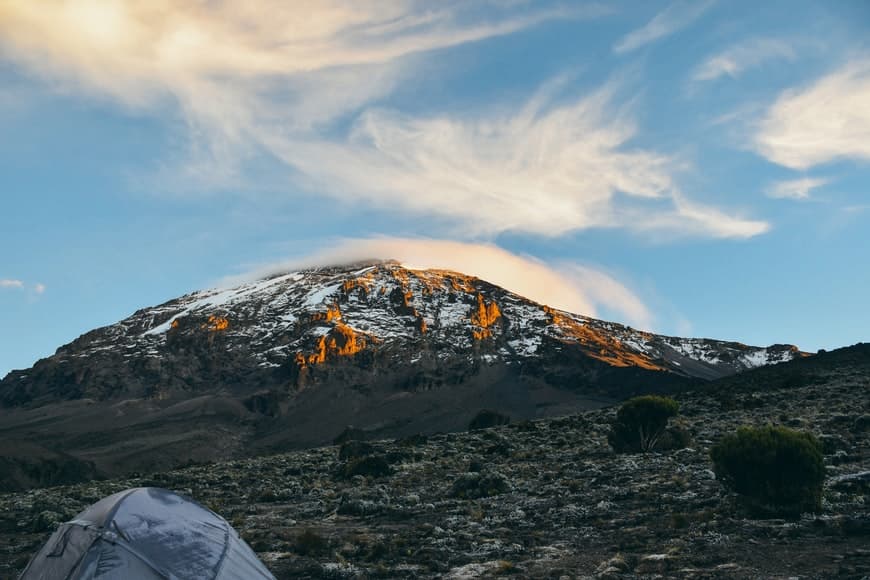
A number of glaciers edge their way down the slopes of Kibo. These include Rebmann, Arrow, Heim, Decken and a few smaller ones. These glaciers form part of Mt Kilimanjaro's permanent ice cap. However, it is believed that they are receding due to global warming.
Kilimanjaro National Park climate
The Kilimanjaro National Park lies a mere three degrees south of the equator, and is influenced by the Inter-tropical Convergence Zone passage. The area has a constant summery feel, and offers two rainy seasons. The Kilimanjaro National Park receives its highest rainfall from March until roughly the end of May, which is the monsoon period. A shorter rain period occurs from October to November, and sometimes extends into December. The region gets less rain in this period than in monsoon time. Weather remains fairly constant throughout the year, with the exception of these two rainy periods.
The forest belt of the Kilimanjaro National Park receives the most rainfall, and as much as 2000 mm can fall in this region in a year. The summit, in contrast, receives less than a mere 100 mm per year. Rain (and even snow at higher altitudes) can be encountered at any time of the year during a tour.
Average temperatures in the Kilimanjaro National Park range from between 25 to 30º C at the foot, to between 10° to 20° C at the summit. At 3000 meters above sea level daily temperatures range from between 5° - 15° C, and night time brings frost.
Can I do the climb, or is it too difficult?
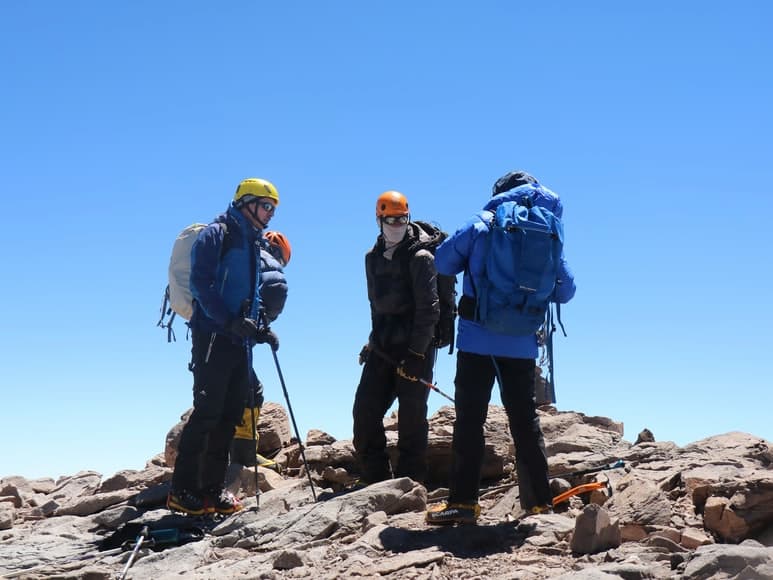
Mt Kilimanjaro greets about 22,000 climbers each year. However, a better description for someone summiting Mt Kilimanjaro would be "hiker", as opposed to "climber", since summiting Mt Kilimanjaro requires no mountaineering skills. This does not mean that reaching Uhuru is a walk in the park! The hike to the peak of Mt Kilimanjaro is mentally and physically demanding, and should by no means be underestimated. Up to 40 per cent of all hikers setting out to reach Uhuru turn back before doing so.
The bulk of those summiting Mt Kilimanjaro are hikers, because the mountain offers hikers one of the highest accessible peaks in the world that does not require mountaineering skills.
Mt Kilimanjaro does offer extremely severe climbs. These include grade 3+ climbs. They are however best left for experienced mountaineers and professional alpine climbers. The information offered by Climbing Kilimanjaro is aimed to inform the average person wishing to reach the summit of Mt Kilimanjaro.
Any person above 12 years of age with a reasonable fitness level and adequate preparation can reach the summit of Mt Kilimanjaro successfully. To date, the oldest person to reach the Roof of Africa is a Frenchman by the name of Valtee Daniel, who successfully summitted Mt Kilimanjaro at the age of 87!
The keys to success on Mt Kilimanjaro is preparation; both mentally and physically. This is where Climbing Kilimanjaro is valuable, in that it supplies comprehensive information garnered from more than 15 years of hands-on tour experience in the field, and listening to feedback from thousands of customers. Our guide will contribute to your tour success on one of the most spectacular mountains in the world.
Choosing A Kilimanjaro Route
For more information about the tour routes available on Mt Kilimanjaro, please visit the different routes page.
Area map of Tanzania